Digital Products & Systems

Have a digital idea? Let’s turn it into something people can use.
I design and build digital products, web applications and business systems that solve specific problems and make complex workflows easier. From an early-stage MVP to a more complete SaaS platform, I can help take an idea from concept and user experience through to a working product.
Incep CRM · Dashboard
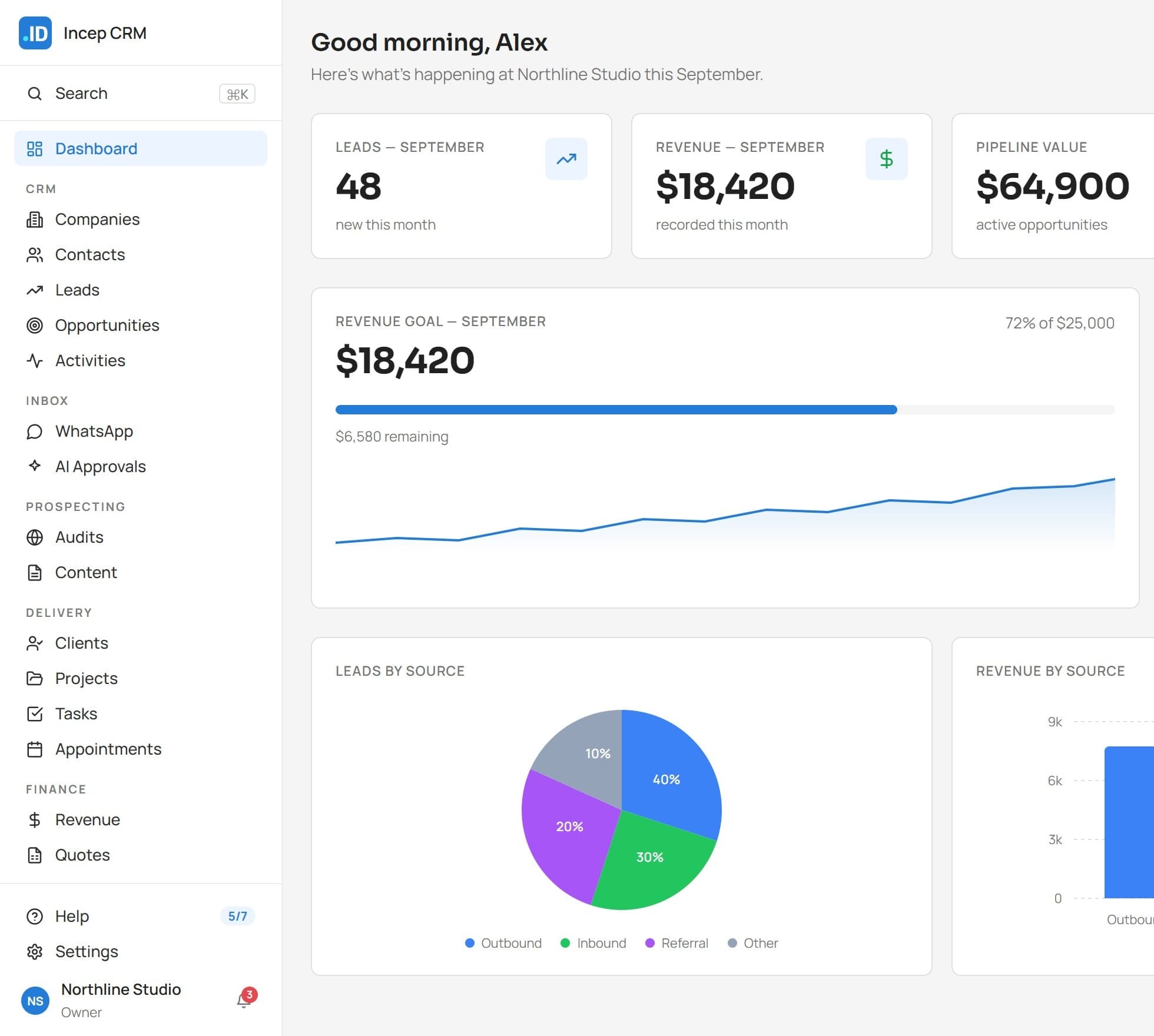
Idea → product.
An Idea Is Only the Start
Turning an idea into a product is a different challenge.
Having an idea is easy. Figuring out what should actually be built is harder.
Which features matter?
What should the first version include?
How should users move through the product?
What technology should power it?
How should the system scale?
And most importantly: does anyone actually need it?
I help turn those questions into a clear product direction and a working digital experience.
The Service
From early ideas to functional digital products.
SaaS Products
Web-based software designed around a specific problem, workflow or customer need.
Examples
Business Platforms
Management Tools
Subscription Products
Content Platforms
Industry-Specific Software
Web Applications
Interactive web applications that go beyond traditional websites.
Examples
Dashboards
Portals
Customer Applications
Internal Tools
Booking Systems
Custom Workflows
MVP Development
A focused first version designed to test an idea without spending unnecessary time building everything at once.
Focus
Core Functionality
User Experience
Technical Foundation
Testing
Iteration
AI-Powered Products
Integrating AI into products and workflows where it can provide genuine value.
Examples
AI Assistants
Content Generation
AI Search
AI Workflows
AI-Powered Features
Intelligent Automation
Business Systems & Automation
Digital systems that help businesses manage processes, information and repetitive work more efficiently.
Examples
CRM Systems
Workflow Automation
Business Dashboards
Internal Tools
API Integrations
Data Workflows
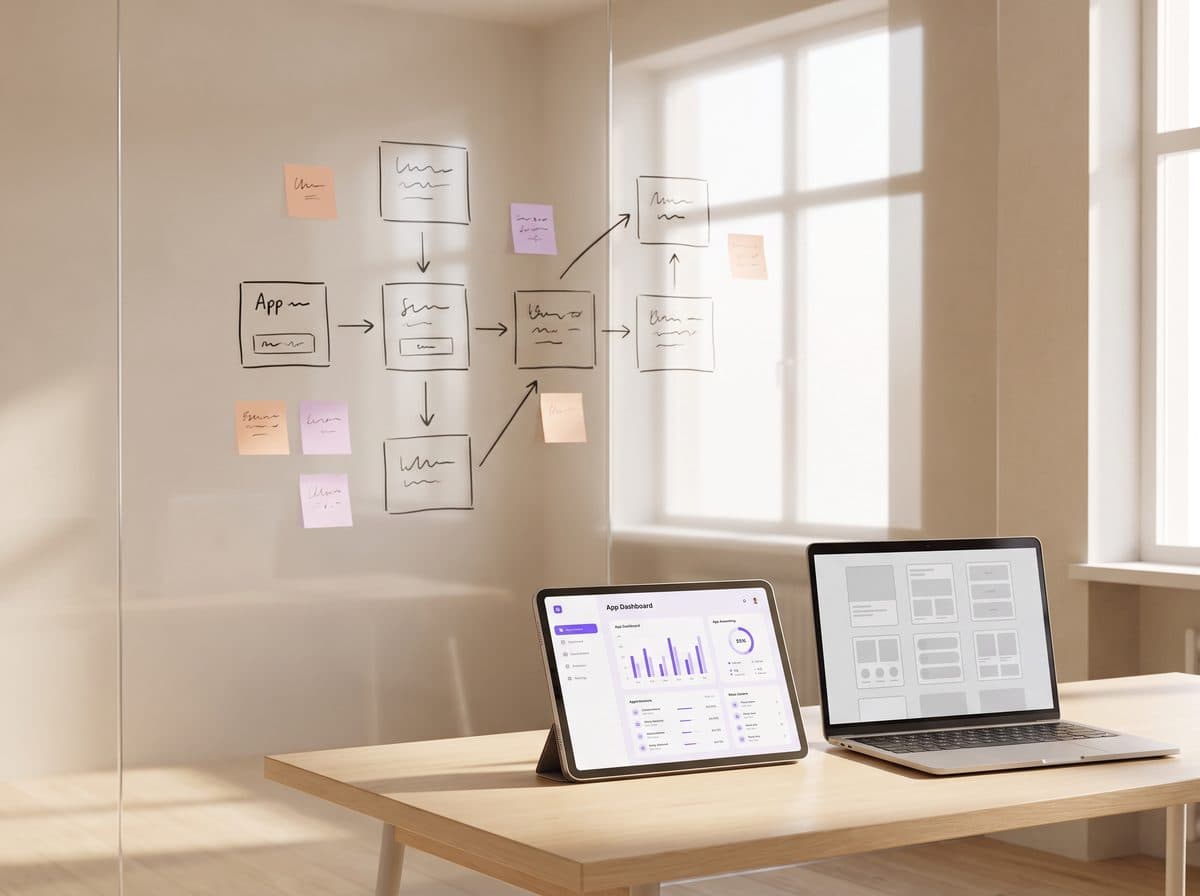
Idea. MVP. Product.
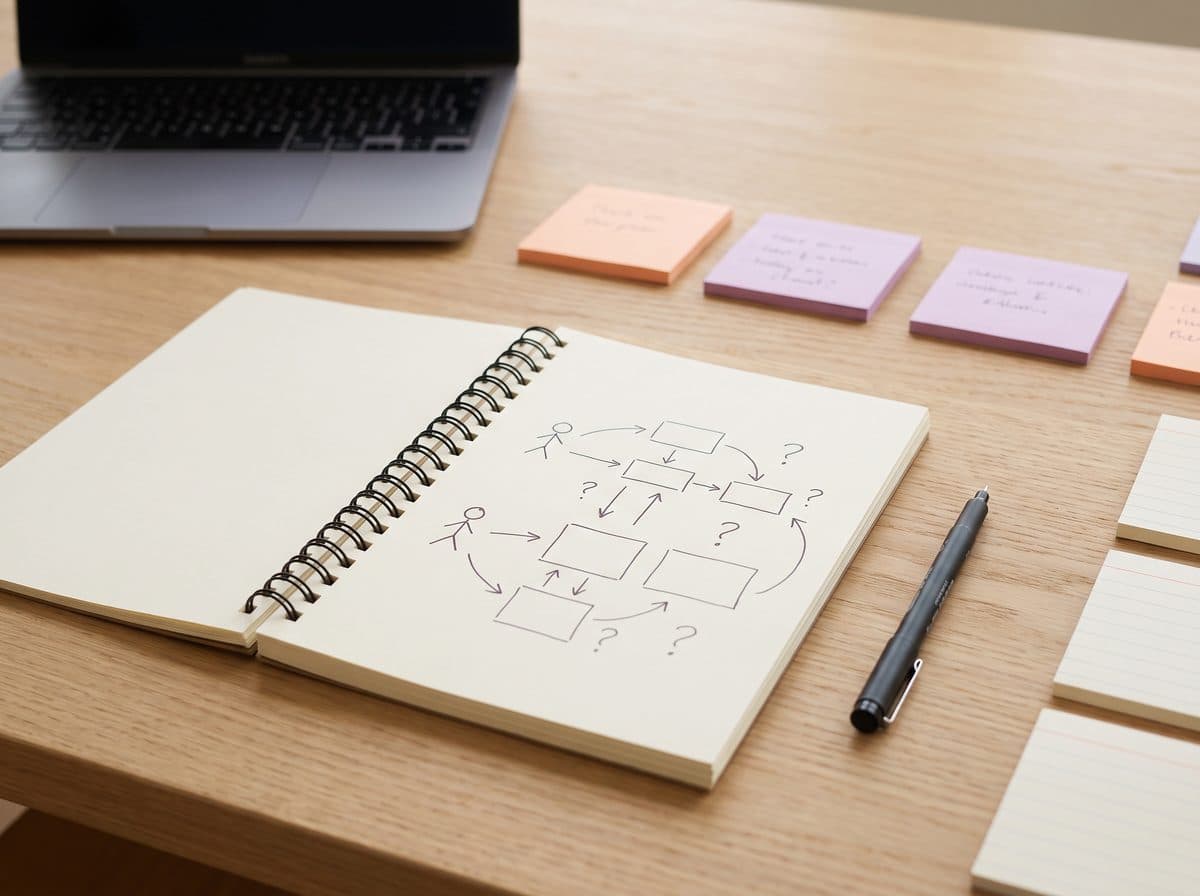
Problem first.
How I Approach Products
I don’t start by asking what features you want.
I start by asking what you’re trying to solve.
A product can have dozens of features and still fail to solve the core problem. That’s why I want to understand:
Who is using it?
What are they trying to accomplish?
What is frustrating about the current process?
What does success look like?
What absolutely needs to exist in the first version?
The answers determine what we build.
From Idea to Product
A product becomes clearer as you build it.
01
Discover
Understand the problem, users, business model and desired outcome.
02
Define
Determine the core functionality, product scope and priorities.
03
Design
Map the user experience and create the product interface.
04
Build
Develop the core product and connect the required systems and integrations.
05
Test
Put the product in front of real users or use cases and identify what needs improvement.
06
Iterate
Use what you learn to improve the product and determine what should come next.
The goal isn’t to build everything. It’s to build the right thing first.
Start Small. Learn Fast.
Your first version doesn’t need everything.
One of the easiest ways to make a digital product unnecessarily expensive is to build every idea at once.
A focused MVP gives you something real to test. Instead of spending months building features nobody uses, we identify the core experience and get it into people’s hands.
The MVP filter
Must Have
What does the product absolutely need to solve the core problem?
Should Have
What would significantly improve the experience but isn’t essential for version one?
Later
What can wait until there’s evidence that users actually need it?
Build the core.
→
Learn from reality.
→
Then expand.
Design
Software should feel understandable, not overwhelming.
Good product design isn’t about filling the screen with features. It’s about helping people understand what they can do and making the important actions easy to find.
Clarity
Users should understand where they are and what they can do next.
Simplicity
Complex functionality should feel manageable.
Consistency
The interface should behave predictably across the product.
Feedback
Users should understand what happened after they take an action.
Flexibility
The product should be able to evolve as the business grows.
Intelligent Systems
AI is most useful when it solves an actual problem.
I’m particularly interested in using AI as part of useful products and workflows rather than adding AI simply because it’s fashionable.
Not “where can we add AI?” but “where can AI make this meaningfully better?”
AI Assistants
Helping users find information, complete tasks or interact with a system.
Content & Generation
Automating repetitive content creation while keeping users in control.
Intelligent Workflows
Using AI to classify, summarize, transform or route information.
AI Search
Making large amounts of business or product information easier to navigate.
Automation
Connecting AI with existing tools and workflows to reduce repetitive work.
Under the Hood
The stack should fit the product.
Different products need different technical approaches. I work with modern web technologies and services to build products that are responsive, maintainable and capable of evolving.
Frontend
Modern web interfaces and responsive application experiences.
Backend
APIs, business logic, authentication and application infrastructure.
Database
Structured data models designed around the product’s requirements.
Cloud & Infrastructure
Deployment, storage, hosting and supporting services.
APIs & Integrations
Connecting the product with the other tools and platforms it needs.
AI
Connecting models and AI services where they provide genuine value.
Technology should make the product possible, not make the product unnecessarily complicated.
Proof of Building
I’m building products too.

Incep Platform
Digital Platform • SaaS
A platform I built to help businesses create and manage their digital presence, including websites, ecommerce and AI-powered capabilities. It’s now live in production.
FlowPrompt
Mobile App • Creator Tool
A mobile teleprompter designed to help creators record videos with more confidence and less friction.
Motion Studio
Creative Tool • Motion Design
An exploration into motion graphics, animation and creative technology.
From Idea to Launch
You can bring the idea. I can help with the rest.
01
Product Strategy
Defining the problem, users, goals and product direction.
02
UX & Product Design
Mapping user journeys, interfaces and core product experiences.
03
MVP Development
Building the first functional version around the essential experience.
04
Full Product Development
Developing a more complete product with the infrastructure required to support it.
05
AI Integration
Connecting AI capabilities to products and workflows.
06
APIs & Integrations
Connecting your product to external platforms and services.
07
Ongoing Development
Continuing to improve the product as users, requirements and opportunities evolve.
Is This a Fit?
You might be here because…
“I have an idea.”
You have a product concept but don’t know where to start.
“My business needs a custom system.”
Existing tools don’t quite fit the way your business operates.
“I need an MVP.”
You want to test a product idea before committing to a much larger build.
“I want to add AI.”
You see an opportunity for AI but aren’t sure where it actually belongs.
“Our current system isn’t working.”
You need to replace, improve or connect existing digital tools.
How I Work
Design and development shouldn’t live in separate worlds.
Because I work across design, development and marketing, I can look at a product from more than one perspective.
The Experience
Is it clear and useful?
The Technology
Can it actually work the way it needs to?
The Business
Does it solve a meaningful problem?
The Growth
Can people find it and understand it?
A good product needs all four.
Questions
Before we build.
Yes. You don’t need a complete product specification. We can start by understanding the problem and defining what the first version could look like.
Have an Idea?
Let’s turn the idea into something real.
You don’t need a complete product plan. Tell me about the problem, who you’re trying to help and what you’re imagining. We’ll figure out what needs to be built first.