
←
All Articles
Product • Building

What I learned from building Incep Platform
Building a platform is very different from building a website. These are some of the lessons that have changed how I approach digital products.

Clemence Kotoku
4 min read
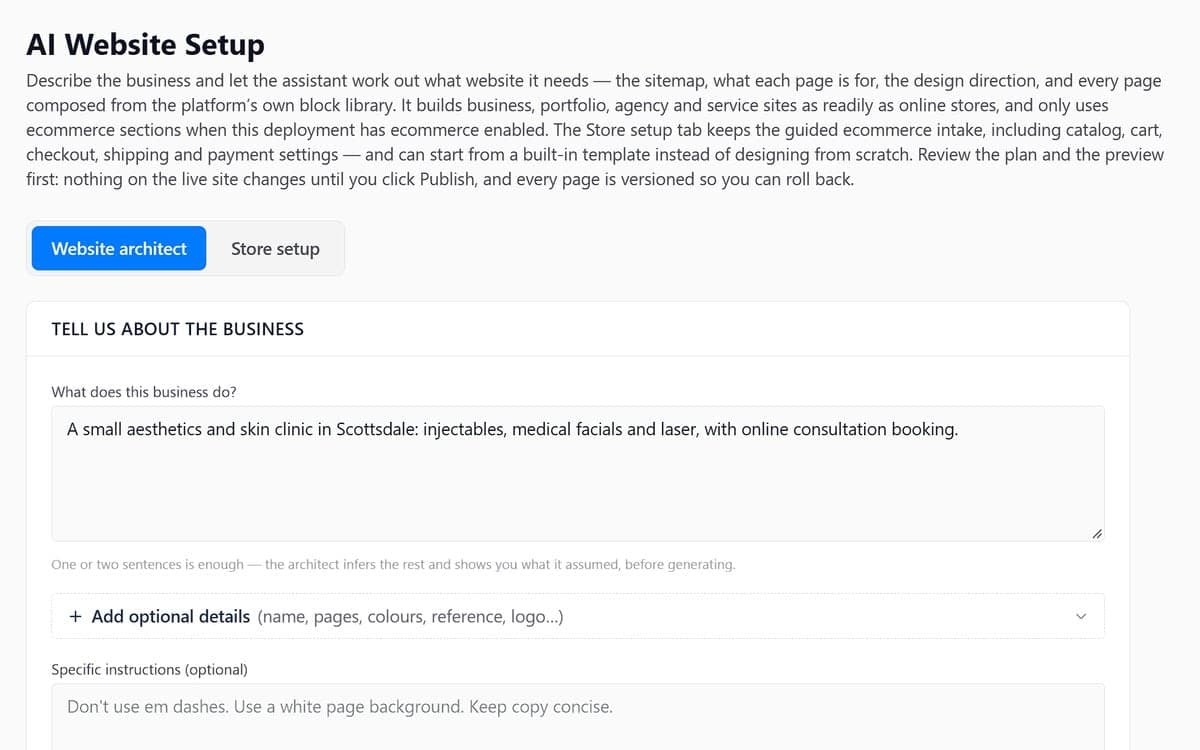
Incep Platform started with a problem I kept running into with clients. Their digital presence was scattered across too many tools. One for the website. Another for the online store. Another for content, another for marketing, another for analytics. Every tool worked on its own, and none of them worked together.
I wanted to see what would happen if those pieces lived in one place. That question turned into a platform that is now live in production, with websites, ecommerce, content management and AI-powered tools connected together.
Building it has been the most demanding project I’ve taken on, and it has changed how I think about digital products. These are the lessons that stuck.
1. A platform is not a big website
I came in with years of website experience, and some of it helped. But a platform is a different kind of problem. A website solves one business’s needs. A platform has to solve the needs of many businesses you haven’t met yet, each with its own content, products, branding and way of working.
That shifts every decision. Instead of asking “what should this page look like?”, you ask “what should anyone be able to build with this?” It’s a harder question, and a far more interesting one.
2. The boring parts are the product
The exciting features get the attention: the page builder, the AI website setup, the design tools. But what makes a platform trustworthy is everything underneath. Payments that settle correctly. Orders that never go missing. Permissions that keep the right people in and the wrong people out. Backups. Error handling. Security fixes nobody will ever notice.
Those parts are invisible when they work, and they are the whole story when they don’t. I spent far more time on them than I expected, and I would do it again.
Users see the features. They stay because of the reliability.
3. AI is most useful when it disappears
Incep uses AI to help plan a website from a short description of a business, write first drafts of content and edit pages from plain instructions. Early on, I was tempted to put AI everywhere and make it the headline.
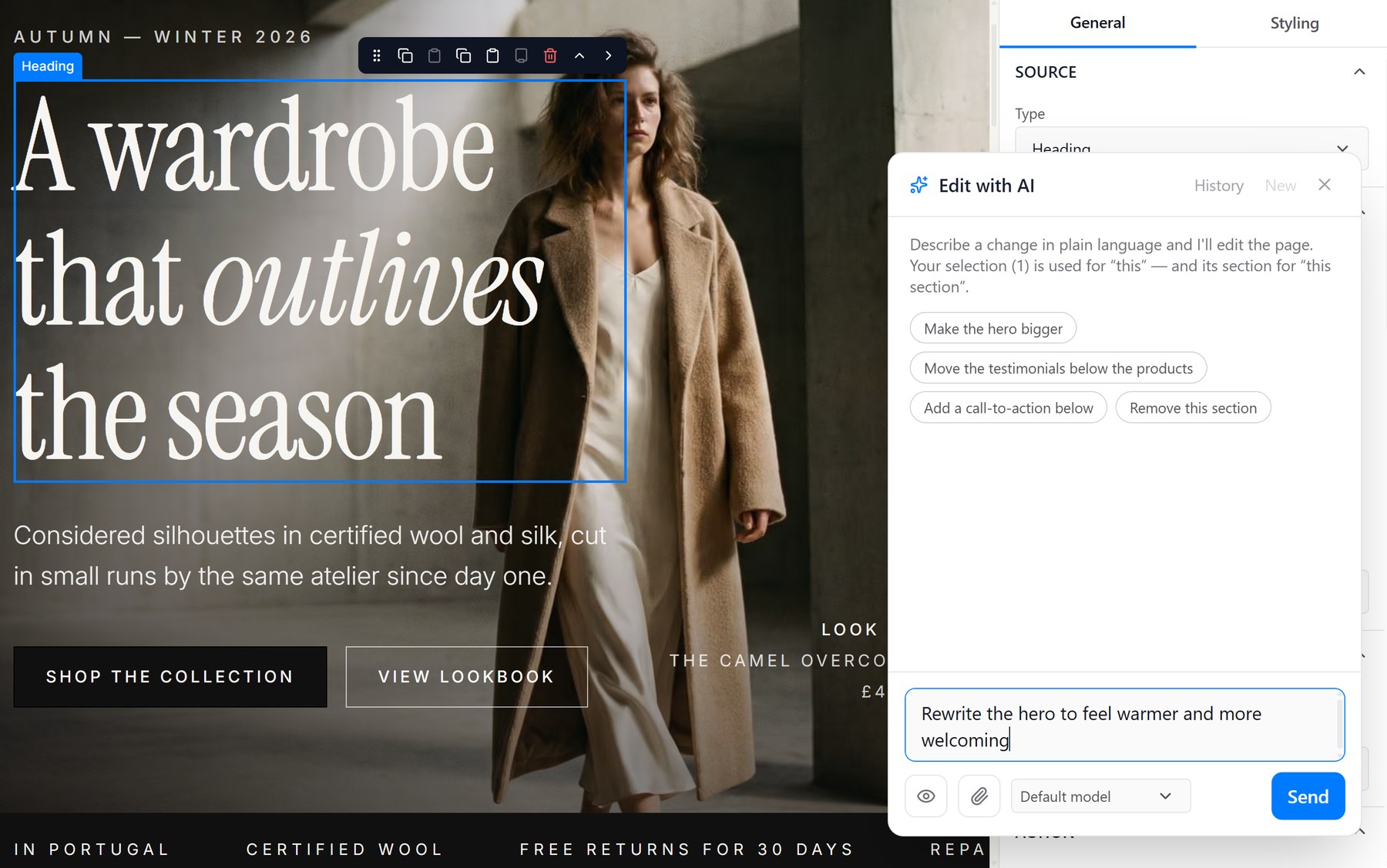
What I learned is that the best AI features don’t feel like AI features. They feel like the product simply got easier. The model has to be guided carefully, checked against real rules and surrounded by good defaults, so the result is something a business would actually publish. Getting there took far more iteration than the first impressive demo suggested.
4. Defaults decide the quality
Most people never change the default settings. That means the defaults are the product for most users.
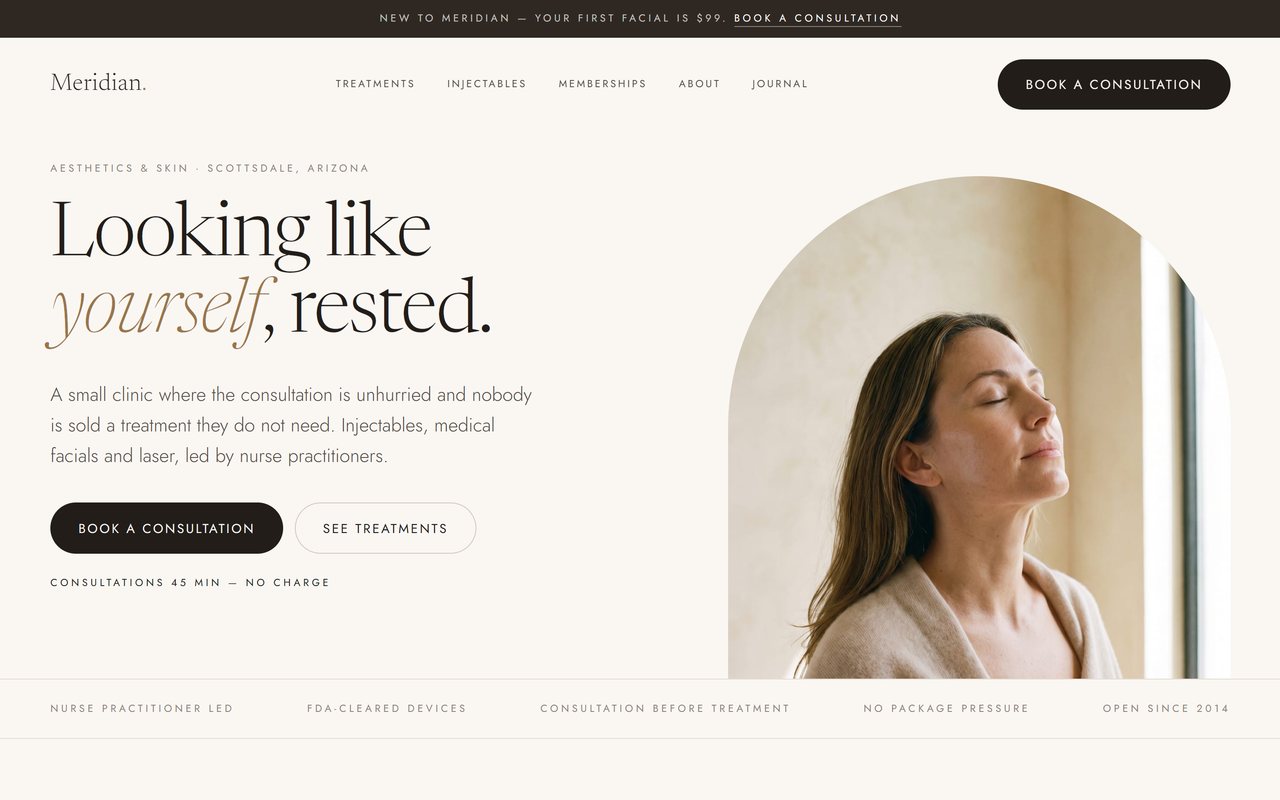
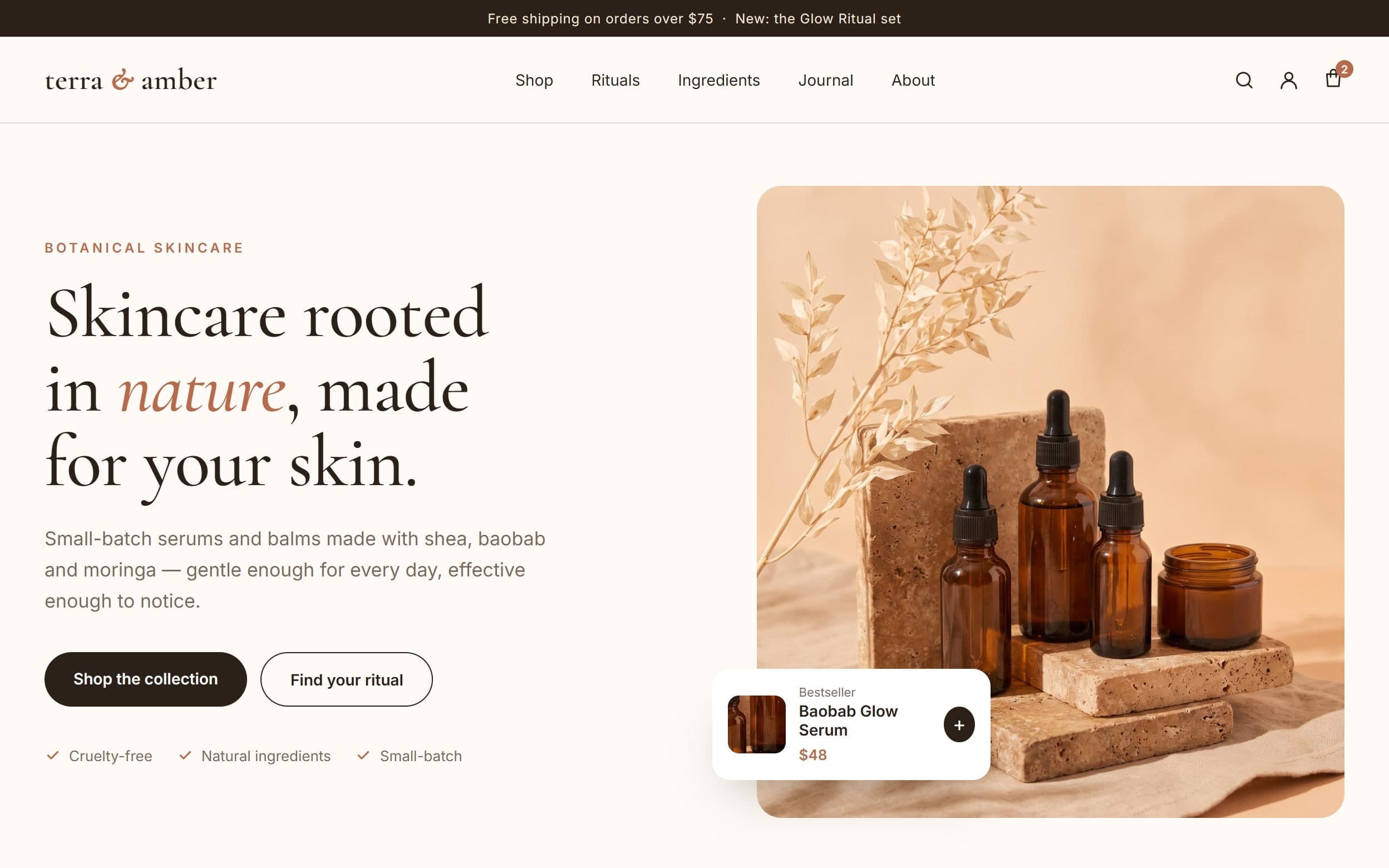
If a new section looks broken the moment it is added, people assume the platform is broken. So a lot of my time went into making sure every block, template and preset looks finished out of the box: sensible spacing, readable typography, proper images and layouts that hold up on a phone. Good defaults do more for quality than any amount of documentation.
5. Cost is a design constraint
When you run software for other businesses, every database query and background job has a real cost, and it runs whether a store has one visitor or a thousand. I learned to design for that early: reading data once and sharing it, avoiding work that doesn’t need to happen and letting systems rest when nothing is going on.
It is not glamorous, but it is the difference between a product that can grow and one that becomes too expensive to run.
6. Shipping teaches faster than planning
I planned a lot at the start. Some of those plans held up. Many didn’t survive contact with real use. The platform improved fastest whenever I shipped something, watched how it was used, and fixed what that revealed.
Every version taught me something that made the next one better. It’s the same loop I follow in all my building: notice, explore, build, test, learn, improve.
7. Building for myself made me better for clients
The unexpected benefit of building Incep is how much it improved my client work. I understand systems more deeply. I think more carefully about performance, security and maintainability. I design websites that businesses can actually run themselves, because I have seen what happens when they can’t.
Incep Platform is still growing, and I’m still learning from it every week. If you want to see it for yourself, visit Incep Platform. And if you have a product idea of your own, let’s talk about building it.
Written by
Clemence Kotoku
Web designer, developer and digital marketer. I build websites, digital products and systems that help businesses grow, and I write about what I learn along the way.
Working on something?
Let’s make your website do more.
Tell me what you’re building or improving, and I’ll come back with the right way forward.
Share this article
Keep Reading
More from my desk.

Websites • Marketing
Your website is useless. Let me explain why.
A website doesn’t make sales simply because it exists. Here’s what actually needs to happen before your website can contribute to growth.
Web Design • Conversion
What makes a high-converting website?
Good design isn’t just about making a website look impressive. It’s about helping the right person understand what you offer and what they should do next.

AI • Productivity
5 AI tools I’m actually using in my workflow
There are thousands of AI tools available. These are some of the ones that have actually found a place in my day-to-day workflow.
Let’s Connect
Have something you’re trying to build?
Whether it’s a website, a campaign or a product idea, I’d love to hear about it. Start with the problem. We’ll figure out the rest together.